Buying property in a multi-phase project: What should you know before buying?
2026-09-27
303 common.blog.views


common.abyat_banner.title_2

Not all large residential projects are built and delivered at once; many are implemented in successive phases. One phase may be advanced in construction or near delivery, while others are still under construction or planning. For the buyer, this division is not just a developer's schedule, but a direct factor in the purchase decision, as it affects the handover date, available services upon moving in, ongoing construction around the unit, unit options, prices, and payment plans. Therefore, before buying a property in such a project, you should first know exactly which phase you are buying in.
- What is a multi-phase residential project?
- Why are large residential projects implemented in phases?
- The phase you buy in is more important than the project name alone
- Buying a unit in an early phase
- Buying a unit in an advanced phase
- How do prices differ between project phases?
- What does it mean to receive your unit while the project is still under construction?
- Is it possible to live in a completed phase before the whole project is finished?
- What should you know about construction works after handover?
- When do project facilities become available to residents?
- Differentiate between ready, under construction, and planned facilities
- Is the location of the phase within the master plan important?
- How to read the master plan before choosing the phase?
- Does the payment plan differ from one phase to another?
- How do new phases affect delivered phases?
- Is buying the first phase better than later phases?
- What risks should you assess in a multi-phase project?
- Delay of a phase
- Different timing for facility completion
- Ongoing construction after unit handover
- Changes in supply within the project
- Different phase specifications
- Relying on future elements not yet implemented
- What should you check before buying a unit in a multi-phase project?
- Abayat Hills Project: An example of a large residential project developed in phases
- How to view Abayat Hills Project from a phased perspective?
- Multi-phase project or small project: How does the buying experience differ?
- Who is early phase buying suitable for? And who is the advanced phase more suitable for?
- How does Imtilak Real Estate help you when buying a property in a multi-phase project?
What is a multi-phase residential project?
A multi-phase residential project is designed according to a single master plan, but its implementation is divided over time into successive parts called phases. This approach is known as phasing. Each phase may include a specific group of buildings and residential units, part of the internal roads and infrastructure, and some facilities or public spaces. The method of division varies from one project to another; phases may be divided by location within the project, by unit type, or by execution sequence.
Does a multi-phase project mean the project is incomplete? Not necessarily. It means the full plan is implemented over different periods, so some parts may be finished or inhabited while work continues in others. Therefore, you should assess the status of the phase your unit is in, as well as the overall project, rather than judging it as a whole.
If the unit you are considering is not yet complete, it is also useful to understand the general framework of buying off-plan property before delving into phase details.
Why are large residential projects implemented in phases?
Developers use phased implementation for several general reasons, most notably: the size of the project, which is difficult to complete at once; organizing resources and labor over periods; delivering inhabitable parts gradually; linking execution to sales and cash flow; and developing internal infrastructure step by step. However, these are common reasons in the sector, and none should be assumed for a particular project unless announced by the developer or stated in project documents.
The phase you buy in is more important than the project name alone
Two people may say, "We bought in the same project," but their experiences could be very different: one may have bought in an early phase that hasn't started yet, and the other in a phase near delivery. This leads to differences in delivery date, completion rate, available services, ongoing works around the unit, unit options, payment plan, and unit price. Therefore, it's not enough to ask about the project's reputation, but about the specific phase.
Buying a unit in an early phase
Early phases may offer wider options in terms of sizes, floors, and views, and different payment plans may be available. On the other hand, the waiting period until delivery is usually longer, and you rely more on the developer's adherence to their schedule, as most of what you are buying has not yet been built.
Buying a unit in an advanced phase
In advanced phases, buyers can usually see more of what has been built on the ground, and the delivery date is closer and clearer. However, the remaining unit options may be fewer or different, and pricing and payment terms may change. It's not always the case that early phases are cheaper or advanced phases are more expensive; it depends on the project data itself.
How do prices differ between project phases?
The unit price is not linked to the phase alone, but to a set of factors that interact with it, including: construction stage, unit type and size, location within the project, floor and view, building, payment plan, available offers, and general market conditions. Therefore, you may find two units in the same phase at different prices, or two units in different phases at similar prices.
Do unit prices automatically rise as the project moves to a new phase? Not necessarily. Prices may change during the project phases, but the direction and amount of change depend on pricing policy, construction progress, unit demand, market conditions, and the specifications of each phase. Therefore, you shouldn't assume a specific increase or base your purchase decision on such an expectation.
Since price is not considered separately from the payment method, it's important to understand the mechanism of buying property in installments and how payments are linked to construction stages.
What does it mean to receive your unit while the project is still under construction?
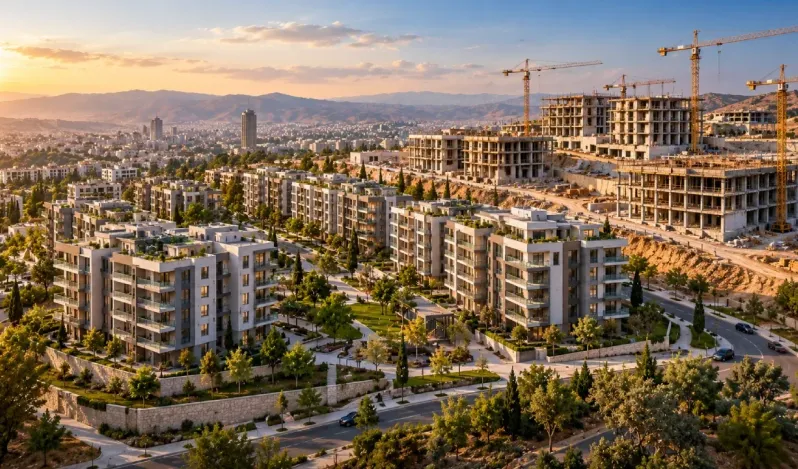
In multi-phase projects, you may receive your unit in a completed phase while other works continue around you, such as building in later phases, completing internal roads, landscaping and facilities, or commercial areas. This is normal in such projects, but it needs to be expected and understood before buying.
Is it possible to live in a completed phase before the whole project is finished?
This is possible in many cases, but it depends on the readiness of the phase itself, not just the completion of the apartment; i.e., on the availability of essential services like water, electricity, and sewage, safe access to the building, and completion of the necessary procedures and approvals for handover and occupancy.
What should you know about construction works after handover?
Ask about the expected period for ongoing works near your building, equipment and truck movement routes, how entrances and parking will be affected, expected noise and dust levels, and what the surroundings will look like in the first years. These details do not show in promotional images, but they shape the real living experience.
When do project facilities become available to residents?
The master plan may include gardens, shops, entertainment areas, parking, public spaces, and sports facilities. But the more important question is not: Are these facilities in the plan? Rather: When will they be implemented, and in which phase? You may receive your unit years before the facilities that encouraged you to buy are completed.
Differentiate between ready, under construction, and planned facilities
When evaluating any multi-phase project, classify each facility into one of three statuses: actually ready and usable today, under construction with an expected date, or planned for the future but not yet implemented. Do not give planned facilities the same weight as existing ones.
Is the location of the phase within the master plan important?
Yes, and to a great extent. The master plan is the comprehensive map showing the distribution of buildings, roads, facilities, open spaces, and phases in the entire project. The location of your phase determines its relation to entrances and main streets, proximity to facilities, commercial activities, and parking, and whether it will be adjacent to a later phase where work will continue for years.
How to read the master plan before choosing the phase?
Request the approved master plan, locate your unit on it, then ask: What will be built in front of me? What is behind the building? Where will the roads pass? Where are the services? Which phases will be implemented next to me later? Remember that marketing materials are often illustrative, and the reference is the contract and approved plans.
Does the payment plan differ from one phase to another?
It may differ, but this is not a fixed rule. The developer may offer a different down payment for each phase, a different installment schedule, a longer or shorter repayment period, or offers linked to a specific phase. Therefore, do not compare phases based on unit price alone, but on the full equation: price, payment timing, delivery date, and the remaining financial commitment until handover.
How do new phases affect delivered phases?
When a new phase begins, it affects residents of previous phases in several ways: it may mean completion of additional parts of the project, an increase in population, and the emergence of new services. It may also mean ongoing construction near inhabited buildings for a while, and an increase in the supply of units within the same project. Therefore, the effect is not always positive or negative, but depends on the nature of the project, the location, and timing of the new phase.
Is buying the first phase better than later phases?
There is no single best phase for everyone. Each phase offers advantages and imposes different considerations, and the choice depends on the buyer's priorities, not the phase order.
Criterion | Early Phase | Advanced Phase |
Waiting period | Potentially longer | Usually shorter |
Unit options | May be wider | May be fewer |
Clarity of what has been built | Less | More |
Level of uncertainty | Relatively higher | Relatively lower |
Completion of surrounding project | Less | More |
Payment plans | May differ | May differ |
In summary, the decision of someone who needs housing soon is not the same as that of a long-term investor, or someone who prefers early purchase and is willing to wait.
What risks should you assess in a multi-phase project?
Phased development does not necessarily mean the project is riskier, but it adds elements that deserve professional assessment.
Delay of a phase
A phase may be delayed due to technical, financial, or force majeure reasons, which may affect your phase even if it is not the delayed one.
Different timing for facility completion
You may move in before the facilities linked to later phases are completed.
Ongoing construction after unit handover
Works in adjacent phases may continue after you move in.
Changes in supply within the project
New units released in later phases may affect sales and resale activity within the project.
Different phase specifications
Specifications may not be identical for all phases, so check your phase's specifications specifically in the contract.
Relying on future elements not yet implemented
Do not evaluate the project solely based on its expected final image, but on what is contractually guaranteed and what actually exists.
What should you check before buying a unit in a multi-phase project?
Before signing, make sure to get clear and documented answers to the following questions:
Which phase is the unit in? What is the current status of this phase?
What is the announced handover date? What has actually been completed on the ground?
What phases remain? When will works around the unit finish?
What facilities are currently ready? What are the future facilities and when are they expected to be implemented?
Where is the unit located within the project's master plan?
What is the payment plan? What are the remaining financial commitments until handover?
Do the specifications of this phase differ from others?
What is the legal and contractual status of the unit? When is the final sales contract signed?
What does the contract state if the schedule changes or delivery is delayed?
This checklist complements the general steps for comparing real estate projects, but focuses specifically on the impact of phases on your decision.
You may be interested: How to compare real estate projects before buying property in Syria?
Abayat Hills Project: An example of a large residential project developed in phases
Abayat Hills is a residential project in Qudsaya Suburb (E3) in Rural Damascus, developed by Abayat Saudi Investment and Development Company in partnership with the General Housing Establishment. It includes more than 2,000 residential units over an area of about 380,000 square meters, with a declared completion plan extending over four years.
How to view Abayat Hills Project from a phased perspective?
When studying a project the size of Abayat Hills, comparison is not limited to apartment size or number of rooms, but also includes the phase where the unit is located, its construction schedule, handover date, and payment plan. The subscription contract terms published on the Ministry of Public Works and Housing website clarify these aspects precisely:
Three phases of different sizes: The contract distributes 2,072 units over three phases: 500 units in the first, 530 in the second, and 1,042 in the third.
Unit type determines the phase: Apartments from two to five rooms are distributed across the three phases, while duplex apartments and attached and detached villas are only in the third phase.
Gradual handover: The contract states that the first phase will be handed over in 2028, the second in 2029, and the third in 2030, with a force majeure clause allowing for extension of deadlines.
Gradual allocation: The first phase is allocated within a maximum of three months, the second a year after the first, and the third a year after the second.
Phase-linked pricing: The price per square meter at the allocation of the first phase ranges between $950 and $1,150 depending on location, floor, view, area, and specifications, while prices for the second and third phases are announced upon their allocation.
Payments linked to progress: 20% upon signing the allocation contract, then 20% upon completing 50% of the structure, 20% upon completing 100% of the structure, 20% upon completing 50% of the finishing, and 20% upon handover, through a joint bank account that can only be withdrawn from according to approved completion percentages.
Here, the previous criteria appear in practice: those seeking a villa will necessarily be in the last phase and wait longer, and those choosing an apartment in the third phase will not know its final price until allocation. The contract also states that paying the subscription fee is not a sales contract, that units are for residential use with restrictions on resale before paying a specified percentage, and that marketing materials are illustrative and the reference is the contract and plans.
You can view details of Abayat Hills Project and updates on allocation and construction phases through Imtilak Real Estate, as one of the official sales points for the project.
Multi-phase project or small project: How does the buying experience differ?
A large multi-phase project usually offers a wider master plan, more potential facilities, and more variety in units, but it extends over a longer period and you may live through a stage of ongoing construction around you. A smaller project has a smaller scale and its implementation cycle may be simpler and shorter, but its internal services may be limited depending on its nature. There is no absolute better option; the decision depends on your needs and tolerance for waiting. You can compare available property options in Syria of both types before deciding what suits you.
Who is early phase buying suitable for? And who is the advanced phase more suitable for?
The buyer who does not need immediate housing may accept a longer wait for wider options. The buyer who wants to see what has been built may prefer an advanced phase that can be inspected. The long-term investor needs to study the entire project, its development plan, and contractual restrictions on resale, not just the phase. The family may give more weight to the timing of completion of schools, services, and nearby facilities. There is no single recommendation that suits everyone.
How does Imtilak Real Estate help you when buying a property in a multi-phase project?
Buying a property in a multi-phase project requires reading the whole project, not just the unit on offer. Therefore, Imtilak Real Estate helps the buyer understand the phase of the unit, construction status, its location within the master plan, payment plan and delivery date, and compare available options clearly.
If you are looking for a property in a residential project in Syria, you can contact the Imtilak Real Estate team via WhatsApp to get details of available projects and units and choose what suits your needs and budget.
common.blog.share_article


common.blog.share_article
common.blog.more_imtilak