


Why do apartment prices differ within the same residential project?
2026-09-29
173 Views
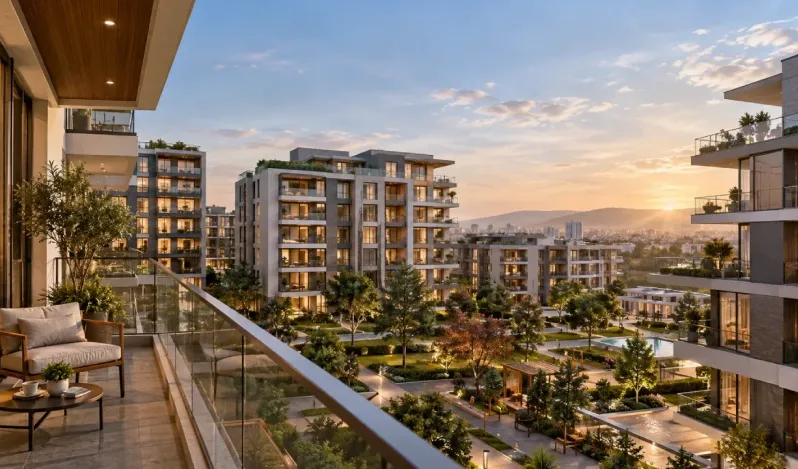


Choose the property that matches your lifestyle

When browsing the list of available units in a single residential project, you may notice that two apartments have the same number of rooms and similar areas, yet there is a clear difference in price between them. This may seem strange at first, as both units belong to the same project and benefit from the same general location, facilities, and services.
However, the reality is that apartment prices in residential projects are not determined by the project alone. The project sets a general framework for value, then the characteristics of each unit determine its position within this framework: which building it is in, where that building is located within the master plan, which floor it is on, what view it has, how its space is distributed, what attachments it includes, at what stage it was offered, when its delivery date is, and under which payment plan it is sold.
- The location of the unit within the master plan of the project may change its price
- Why do prices differ between buildings within the same project?
- The floor affects the unit price, but not by a single rule
- The façade and orientation distinguish one unit from another
- The view within the project may make a price difference
- Area alone does not explain the price difference between project units
- The unit type may change its pricing method
- Balcony, terrace, and outdoor spaces contribute to unit differences
- Parking, storage, and attachments may change the final price
- The project phase may make two similar units have different prices
- Delivery date may be part of the price difference
- The payment plan may make comparing only the announced price misleading
- The timing of the unit's release for sale may affect its price
- Is the price per square meter enough to compare two units within the project?
- How do you compare two units within the same residential project?
- Is the highest-priced unit in the project the best?
- Find the right unit for you in Imtilak Real Estate projects
For this reason, the question many buyers ask: "What is the cheapest two-bedroom apartment in the project?" may not be the most appropriate question. The more accurate question is: What do I get in return for the price difference between this unit and that one?
The location of the unit within the master plan of the project may change its price
In integrated residential projects, not all points within the project are equally attractive. The master plan distributes buildings, internal roads, gardens, and facilities in a way that gives each location its own characteristics.
Factors that may affect the price of the unit according to its location within the master plan include:
Proximity to the main entrance: Some buyers prefer it for ease of access, while others see it as a source of movement and noise.
Proximity to gardens and green spaces: May give the unit more tranquility and a better view.
Proximity to facilities: Such as the swimming pool, gym, or commercial area, which is an advantage for some families and a disadvantage for those seeking privacy.
Internal roads and movement areas: Units overlooking car passages or visitor parking may differ from those overlooking quiet spaces.
Relationship with other buildings: The distance between buildings affects privacy, light, and ventilation.
This concept is an extension of a broader idea discussed in the article The hidden value of location: How does the property's location within the area affect its valuation?, but on a smaller scale: the location within the project itself.
Why do prices differ between buildings within the same project?
In projects that include several buildings or towers, each building may be priced differently. This is due to several reasons, including:
The building's location within the project: A building in the heart of the project differs from one on its edge or overlooking an external street.
Stage of construction: One building may be at an advanced construction stage while another is just starting.
Available views: Some buildings overlook the central garden or open space, while others overlook neighboring buildings.
Proximity to services and facilities: Which reflects on the ease of daily use.
The nature of units in the building: A building dedicated to large units or penthouses may be priced differently from a building dominated by small apartments.
Therefore, when comparing two units in different buildings, it is useful to first know why the buildings differ before comparing the two units.
The floor affects the unit price, but not by a single rule
It is common to assume that higher floors are always more expensive, but the reality is more complex. The top floor may offer a wider view, more tranquility, and better ventilation, but it may be less suitable for the elderly or families who prefer less reliance on elevators, especially in areas where services may be affected by power outages.
Conversely, ground floors may have special features such as a private garden or independent entrance in some projects, which may increase their value for a certain group of buyers. The top floors may be associated with penthouses or rooftops, which is a separate pricing case.
The important thing here is not to rely on a fixed rule, but to check the actual pricing policy in the project you are considering.
The façade and orientation distinguish one unit from another
Two units on the same floor of the same building may differ in price due to the façade and orientation. The front-facing unit may differ from the rear-facing unit, and a corner unit with two façades may enjoy better lighting and ventilation.
The geographic orientation also affects sunlight and temperature inside the apartment throughout the year, which is a factor many buyers care about in Syrian cities with hot summers and cold winters. However, which orientation is best varies from buyer to buyer and from city to city.
The view within the project may make a price difference
The view is one of the most prominent factors that distinguish one unit from another within the same project. A unit may overlook:
A garden or central green space.
An open space or distant view.
An internal or external street.
An opposite building at a close distance.
Project facilities such as the swimming pool or courtyards.
However, there is a point to pay attention to, especially in projects under construction: The view shown in the plans may not be complete at present. The garden that the unit will overlook may be part of a later phase, and the open space today may be built on in the future as part of the master plan. Therefore, it is important to review the entire master plan and know what is planned around the unit, not just what currently exists.
Area alone does not explain the price difference between project units
Two units may be close in area, but one may be much more practical than the other. The total area does not necessarily reflect the quality of use, so you should look at:
Distribution efficiency: Is the space distributed logically, or is part of it lost in corridors?
Number and size of rooms: Are the bedrooms comfortably sized, or is the extra room too small?
Actual usable area: This sometimes differs from the registered area, which may include a share of common areas, walls, or balconies.
Living-to-sleeping ratio: The balance between the living room, kitchen, and bedrooms.
Therefore, always ask for the unit's detailed plan and how the announced area is calculated.
The unit type may change its pricing method
Residential projects usually include multiple unit types: studio, one-bedroom, two-bedroom, three-bedroom, and may also include duplexes and penthouses. Each type has its own pricing logic, related to demand, the number of available units, and the nature of the targeted buyers.
The price per square meter in smaller units may differ from that in larger units, and penthouses or duplexes may be priced entirely independently due to their characteristics. However, you cannot assume that a particular type is always more valuable; this varies from project to project and market to market.
Balcony, terrace, and outdoor spaces contribute to unit differences
Balconies, terraces, and private gardens are elements that distinguish units from one another. A unit with a large terrace may differ in price from a similar unit with a small balcony, as does a ground floor unit with a private garden.
It is important to know how these spaces are calculated in the price: Are they included in the total area at the full price per square meter, at a different rate, or are they separate additional space? The calculation method may change the true picture of the price.
Parking, storage, and attachments may change the final price
The announced price for two units may be similar, but the final price may differ depending on the attachments associated with each, such as:
Private parking space(s).
Storage room.
Share of the rooftop or designated outdoor space.
Check whether these attachments are included in the price, sold separately, or not available for some units. A cheaper unit without parking may not actually be cheaper if you will need to buy a parking spot later.
The project phase may make two similar units have different prices
In multi-phase projects, you may find two units that are very similar in area and layout, but one is in an advanced phase and the other in a newer phase. They may differ in:
Offering and pricing conditions.
Available payment plans.
Expected delivery dates.
Degree of completion of infrastructure and surrounding facilities.
Therefore, it is important to know which phase the unit belongs to and what that means for you. You can learn more about this aspect in the article Buying property in a multi-phase project: What should you know before buying?
Delivery date may be part of the price difference
Imagine two similar units, one ready or near delivery, and the other with a later delivery date. Their prices may differ, but you cannot automatically say that the one closer to delivery is always more expensive.
The delivery date is a factor in the pricing and sales conditions equation, and is related to what suits the buyer: someone who needs to move in soon may prefer the ready unit, while someone with more time may consider the unit with a later delivery date in light of its payment terms. The important thing is to compare the delivery date as part of the deal, not ignore it.
The payment plan may make comparing only the announced price misleading
This is one of the most important points when comparing units within projects. Two units may have similar announced prices, but completely different payment terms, or the same unit may be offered with more than one payment option.
Therefore, when comparing, do not rely only on the total price, but compare:
The total price of the unit.
The required down payment.
The value and number of installments and the installment period.
Delivery payment if any.
Delivery date and its relation to the payment schedule.
A unit with a slightly higher price but a more flexible payment plan may be more suitable for you than a cheaper unit that requires a large down payment. For more details on this aspect, see the guide Buying property in Syria in installments.
The timing of the unit's release for sale may affect its price
Some projects release their units in batches, so some units are offered early and others later. The prices and sales terms of these units may vary depending on their release timing.
However, beware of the common rule: "Buy at the start of the project because the price will definitely go up." The developer may adjust prices and sales terms during the project lifecycle based on many factors, such as demand, construction costs, market conditions, and work progress. There is no guarantee of a specific price trend, whether upward or otherwise.
Is the price per square meter enough to compare two units within the project?
The price per square meter is a useful tool for initial comparison, but it is not enough alone to make a decision. Two units may have the same price per square meter but differ in actual value, and one unit may have a higher price per square meter for justified reasons.
For the price per square meter comparison to be fair, the following factors must be adjusted:
Unit type and area.
The building it is in.
Its location within the master plan.
Floor, façade, and view.
Included attachments.
Phase and delivery date.
Payment plan.
In other words: the price per square meter is the starting point, not the final judgment.
How do you compare two units within the same residential project?
To make comparison easier, you can use the following table and fill it with the data of each unit you are considering:
Factor | Unit A | Unit B |
Total price | ||
Area | ||
Price per square meter | ||
Unit type | ||
Building | ||
Location within the project | ||
Floor | ||
Façade | ||
View | ||
Space distribution | ||
Balcony/terrace | ||
Parking | ||
Phase | ||
Delivery date | ||
Payment plan | ||
Nearby facilities |
After filling out the table, ask yourself: What are the real differences between the two units? Does the price difference reflect differences in features that really matter to me?
Remember that this comparison comes after evaluating the project itself. The basic rule is: the project first, then the unit. To learn how to start from the first level, see the guide How to evaluate a residential project before buying an apartment in it?
Is the highest-priced unit in the project the best?
Not necessarily. The higher price may reflect additional features such as a prime location within the project, view, area, floor, attachments, or certain sales conditions. But the value of these features varies from buyer to buyer.
A family with children may value proximity to the garden more than a distant view, an investor looking for rental income may care more about unit type and demand than the floor, and someone living outside Syria may prioritize the payment plan and delivery date.
Therefore, the best unit is not the most expensive or the cheapest, but the one whose features match your needs and your purpose for buying, at a price that logically reflects these features.
Find the right unit for you in Imtilak Real Estate projects
The difference in apartment prices within the same residential project is not random, but the result of a combination of factors that distinguish each unit from another: from its location within the master plan, to the building, floor, façade, and view, through to area, distribution, unit type, and attachments, all the way to phase, delivery date, payment plan, and release timing.
When you understand these factors, you become able to read the list of available units in any project more clearly, and your comparison shifts from searching for the lowest price to searching for the best value for you.
If you are considering buying in a residential project, you can contact the Imtilak Real Estate team to help you compare the available units within the project and learn the differences between them in terms of location, specifications, payment plans, and delivery dates, so you can choose the unit that suits your needs.
Do you like this topic? You can share it with your friends now!


Do you like this topic? You can share it with your friends now!
More From Imtilak

Real estate investment in Syria
Real estate investment with a limited budget in Syria


Real estate investment in Syria
Park View Damascus Project: An integrated residential complex with vast green spaces
Real estate investment in Syria
How to evaluate a residential project before buying an apartment in it