Ammar City for Building Materials and Finishing in Syria: A Comprehensive Guide
2026-10-12
475 common.blog.views


common.abyat_banner.title_2

The construction market in Syria today needs more than just good products and scattered shops; it needs a system that shortens the distance between the manufacturer, supplier, and brand on one side, and distribution networks, contractors, and developers on the other. Every additional link in the supply chain means longer time, higher costs, and weaker communication with the actual client.
From this need arises Amar City for Building and Finishing Materials, as an integrated center for display, storage, and distribution, designed for the business sector and not for retail trade. Its concept is summed up in four words that encapsulate the whole model: Show – Store – Distribute – Grow.
- What is Amar City for Building and Finishing Materials?
- The Idea of Amar City
- Who does Amar target?
- Where is Amar City located?
- The Importance of Hassia for Supply Networks
- Connecting with Syrian Provinces and Markets
- How does the Amar system work?
- Show
- Store
- Distribute
- Grow
- Showrooms in Amar: The Brand Showroom Concept
- What is the difference between a showroom and a traditional shop?
- Integration of Showroom with Storage and Distribution
- Warehouses and Logistics Services in Amar
- The Role of Warehouses in the System
- From Display to Distribution
- Which sectors does Amar City target?
- Ceramics, Porcelain, and Marble
- Electricity, Energy, Lighting, and Air Conditioning
- Iron, Cement, and Structural Systems
- Insulation, Sanitary Ware, and Extension Supplies
- Finishing and Coating Materials and Paints
- Amar: A Gateway for Companies Wishing to Enter the Syrian Market
- Establishing a Brand Presence in Syria
- Reaching Contractors, Developers, and Traders
- Building a Supply and Distribution Network
- Transitioning from Export to Operational Presence in the Market
- What does Amar’s presence in the Free Zone add?
- The Digital System in Amar City
- Connecting Physical and Digital Presence
- Managing Products, Inventory, and Sales
- Digital Access to Buyers and Contractors
- The Right to Invest and Operate in Amar City
- The Role of Amar in the Syrian Building Materials Market
In this guide, we get to know Amar: what it is, where it is located, how its system works, who it targets, and why it can be a well-considered entry point for companies into the Syrian building materials market.
What is Amar City for Building and Finishing Materials?
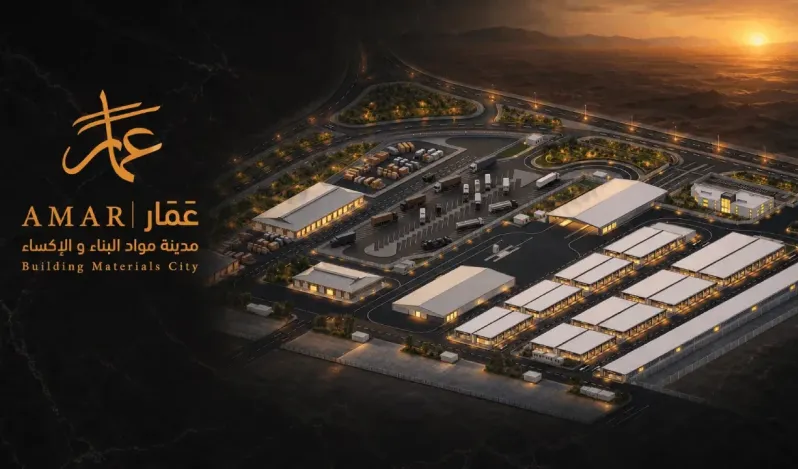
Amar City is a business platform specialized in the building and finishing materials sector, located in the Hassia Free Zone. It brings together in one system showrooms, warehouses, logistics services, and digital presence for suppliers and companies operating in the sector. Its founders present it as an integrated system, not a traditional market, and this is the key to understanding the project.
The Idea of Amar City
In traditional markets, the links of the supply chain are spread across multiple places and entities: the importer in one place, the warehouse in another, the showroom in a third city, and the distributor moves between them. Amar, however, brings these links together at one point, so the company can display its products, store them, and launch them into the market from the same location.
Therefore, the idea is not about owning a shop or commercial space, but about establishing an operational base for the brand inside the Syrian market; a base that represents it to professional clients, preserves its inventory, and feeds its distribution network.
Who does Amar target?
Amar targets the key players in the building materials sector, specifically:
-
Factories producing building and finishing materials.
-
Suppliers and importers who need a stable presence near demand centers.
-
Agents and distributors seeking to expand their client networks.
-
Local, regional, and international brands wishing to enter or expand their business in the Syrian market.
The project divides its audience into three main categories: the investor-trader, the strategic supplier, and the commercial agent, emphasizing that Amar is a B2B platform for the business sector, not a shopping destination for individual consumers.
Where is Amar City located?
Amar City is located in the Hassia Free Zone in the countryside of Homs, on the axis of the M5 International Highway. According to project data, it is about 45 km from Homs and about 115 km from Damascus, and the Syrian coast can be reached from there in about two to three hours.
The Importance of Hassia for Supply Networks
When evaluating the location of a project aimed at the building materials sector, the question is not about the surrounding services or the view, but about the movement of goods: How far is it from demand centers? How easy is access to main roads? Does the surrounding environment allow for receiving, storing, and shipping operations?
Here lies the value of Hassia; it is an area prepared for industrial and logistics activity, located on the country's most important land axis, making it a practical point for receiving goods and redirecting them to markets.
Connecting with Syrian Provinces and Markets
Amar's location on the M5 International Highway gives companies the ability to access the largest building materials markets in Syria:
-
Damascus and its countryside to the south, the largest centers of demand for building and finishing materials.
-
Homs and the central region at a close distance.
-
Hama and Aleppo to the north via the same international highway.
-
The Syrian coast to the west within a few hours.
Thus, Amar becomes a central point from which the south, center, north, and coast can be served from one center, instead of distributing inventory across multiple warehouses in several provinces.
You may be interested: Real Estate Investment in Damascus
How does the Amar system work?
The Amar City system is based on four interconnected functions, forming the brand's journey from the moment it enters the market until it establishes its presence.
Show
The journey begins with a specialized showroom representing the brand, allowing contractors, developers, and traders to see, experience, and compare products and solutions before making a decision.
Store
Inventory is kept near the showroom within the same system, so what the client sees in the showroom is actually available for supply.
Distribute
Amar becomes a launch point for supplying products to clients, contractors, and traders in various provinces, benefiting from its location on the international highway.
Grow
Over time, the brand's presence in Syria shifts from scattered sales deals to a long-term commercial and operational presence, building trust with clients and allowing the company to plan for growth over the years.
Showrooms in Amar: The Brand Showroom Concept
The most misunderstood aspect of the Amar project is the nature of its showrooms. They are not retail shops in the usual sense, but brand showrooms with a completely different function.
What is the difference between a showroom and a traditional shop?
A traditional shop relies on passing customers and direct retail sales. In Amar, the showroom is a representative interface for the brand to professional clients: a contractor choosing materials for an entire project, a developer comparing technical specifications, or a trader looking for a reliable supplier. Products, samples, and integrated solutions are displayed, business relationships are built, and large orders are discussed.
Integration of Showroom with Storage and Distribution
The value of the showroom in Amar is not just in its space, but in the system surrounding it. A showroom close to the warehouse and the international highway can turn a client's visit into an executable order quickly, which is not usually available for a showroom separate from its inventory and distribution network.
Warehouses and Logistics Services in Amar
If the showroom is the brand's interface, the warehouse is what enables this interface to fulfill its promises.
The Role of Warehouses in the System
Warehouses in Amar integrate with showrooms to provide the company with close and ready inventory to meet orders. The project points to the availability of customs warehouses and the possibility of storing goods under customs supervision, which is especially important for importers needing flexibility in managing inventory and timing its release to the market.
From Display to Distribution
Products move within the Amar system along a clear path:
Warehouse → Showroom → Distribution → Market
Goods arrive at the warehouse, samples are displayed in the showroom, and once the deal is completed, the shipment leaves from the same point to the client. This short path reduces the number of transfers and handling, giving the company a better ability to meet project delivery deadlines.
Which sectors does Amar City target?
Amar covers a wide range of building and finishing materials sectors, with each sector benefiting from the model differently according to the nature of its products.
Ceramics, Porcelain, and Marble
Sectors that rely on visual experience; the buyer wants to see the color, texture, and size in reality, making the showroom a decisive factor in the purchase decision.
Electricity, Energy, Lighting, and Air Conditioning
These require displaying systems and equipment and explaining their technical solutions, reaching residential and commercial projects seeking integrated solutions.
Iron, Cement, and Structural Systems
Here, the role of storage and distribution outweighs that of display, as they are ordered in large quantities and contractors care about availability and fast supply.
Insulation, Sanitary Ware, and Extension Supplies
These combine technical display of specifications and solutions with inventory availability to meet project demands at different execution stages.
Finishing and Coating Materials and Paints
These benefit from showrooms to display options and final finishes, and from inventory proximity to secure quantities during the finishing stage.
Amar: A Gateway for Companies Wishing to Enter the Syrian Market
Amar's value goes beyond a showroom or warehouse, reaching what can be called market access; the tools a company needs to actually operate inside Syria, not from outside.
Establishing a Brand Presence in Syria
Amar gives the brand a fixed address inside the Syrian market, known to clients who return to it, instead of relying entirely on intermediaries or indirect representation.
Reaching Contractors, Developers, and Traders
The company's presence in a specialized building materials environment puts it directly in front of its professional clients, in a place these clients visit specifically to look for suppliers and products.
Building a Supply and Distribution Network
From a single location on the international highway, the company can build a distribution network extending to the provinces, dealing with local traders as a present supplier, not a distant one.
Transitioning from Export to Operational Presence in the Market
For regional and international brands, entering Amar represents a shift from exporting to Syria to operating within it: local inventory, direct display, and established client relationships.
However, the results of this entry remain linked to each company's activity, operational capacity, and market conditions, and no guaranteed results or returns can be promised.
What does Amar’s presence in the Free Zone add?
Amar's model is tied to its location within the Hassia Free Zone, as this framework links the project's operations to a clear operational sequence:
Import → Store → Show → Distribute
The free zone is by nature an environment dedicated to import, storage, and re-distribution activities, the same activities Amar's model is based on. However, the customs and regulatory procedures and advantages associated with this framework are subject to the official regulations in effect at the time of investment, so it is recommended to review them with the relevant authorities and within contract documents before making any decision.
The Digital System in Amar City
Amar does not settle for physical presence; it adds a digital layer that makes it a marketplace combining physical and digital presence (Physical + Digital Marketplace), not just a group of adjacent showrooms.
Connecting Physical and Digital Presence
The client can learn about the product digitally, then visit the showroom to experience it, or see it in the showroom and then follow up their order digitally. Thus, the showroom and the digital platform work as two integrated channels, not separate ones.
Managing Products, Inventory, and Sales
The project offers a dashboard for suppliers enabling management of inventory, sales, clients, and reports, giving the company a clearer view of its performance within the system.
Digital Access to Buyers and Contractors
The digital system also includes an online store aimed at buyers and contractors, and a price index to help monitor the market, expanding the company's reach to clients who may not visit the showroom every time.
The Right to Invest and Operate in Amar City
Entry into Amar is based on the right to invest and operate for 15 years, not on traditional real estate ownership. According to project data, ownership reverts after the period ends to the party specified in the contract, with the possibility of renewal according to relevant regulations.
This principle aligns with the project's nature; the company enters Amar to operate its brand and build its presence in the market, not to buy property for resale.
The Role of Amar in the Syrian Building Materials Market
Amar City for Building and Finishing Materials offers a different model for operating in the Syrian building materials market; a model that starts with a well-considered entry into the market, relies on a showroom representing the brand to professional clients, warehouses keeping inventory near the point of sale, and a distribution network starting from a main road axis to the provinces, leading to long-term operational stability that allows the company to plan its growth with confidence.
Thus, Amar does not come as a substitute for existing building materials markets, but as a new organizing link in the supply chain, serving factories, suppliers, agents, and brands wishing to work in Syria with more integrated tools.
common.blog.share_article


common.blog.share_article