How does a new residential area become a fully integrated real estate center?
2026-09-22
436 Views


Choose the property that matches your lifestyle

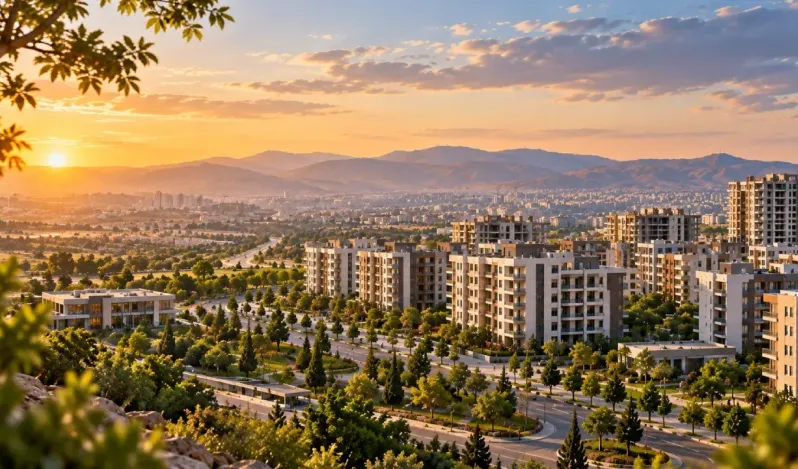
A new area may appear on the map as soon as construction begins, but turning it into a real residential and real estate destination requires more than just building structures; roads, services, residents, commercial activity, and surrounding projects are what determine how the area develops over time.
- What do we mean by an integrated real estate center?
- Stage One: Urban planning determines the area's growth potential
- Stage Two: Roads and infrastructure open the area to residents
- Stage Three: Residential projects begin to create new supply
- Stage Four: The arrival of residents is the real test for the area
- Construction does not necessarily mean real housing demand
- Stage Five: Services follow residents and increase the area's livability
- Stage Six: Commercial activity transforms the area from a sleeping place to a center of life
- Stage Seven: The secondary real estate market begins to form
- How does property value change as the area develops?
- What are the signs that an area has started to mature in real estate?
- How can a buyer evaluate a residential area still under development?
- New Aleppo as an example of the formation of modern residential areas
- Rihab Al Shahba Project within the new residential scene in Aleppo
- Is a good project enough if the area is not yet complete?
- New area or existing neighborhood: What is the difference when buying property?
- How to choose your property in the new residential areas in Syria?
- From a new area to an integrated residential community
- Discover new residential projects with Imtilak Real Estate
So how does an area move from being just a new urban expansion to a place where people live and an actual real estate market forms within it?
What do we mean by an integrated real estate center?
An integrated real estate center is not necessarily the city center or the most expensive area, but rather an area where a complete mix of elements gradually becomes available: housing, accessibility, services, actual residents, commercial activity, successive projects, continuous real estate demand, and an active resale market.
Is establishing a large residential project enough for the success of the area? The answer is no; the project may be an important factor in driving development, but the long-term success of the area is also linked to infrastructure, services, accessibility, occupancy level, and continued demand.
Before delving into the details of each stage, it is useful to understand how to evaluate choosing the right residential area within the context of the urban expansion currently taking place in Syrian cities.
Stage One: Urban planning determines the area's growth potential
Before any actual construction, urban planning defines the features of the area for years to come: the distribution of land uses between residential, commercial, and service, planning of main and secondary roads, permitted urban density, public spaces, the location of future services, and the area's relationship with surrounding areas and its potential for future expansion.
Why is it important for the buyer to understand the future of the area, not just its current state?
Because a buyer of property in an emerging area is not only buying what he sees today, but is making a decision about a place that is still taking shape. However, it is important not to turn this understanding into an investment promise; good planning is a necessary condition, but it alone does not guarantee the success of the area or the speed of its development.
Stage Two: Roads and infrastructure open the area to residents
After the planning stage comes the role of infrastructure: main and secondary roads, water, electricity, sewage, and communication networks, in addition to accessibility and connection to transportation and the rest of the city's neighborhoods. These elements are what make the area actually usable on a daily basis, not just a plan on paper.
Why can accessibility be more important than distance?
An area that is geographically farther but connected by a good road may be easier for daily use than a closer area that suffers from difficult access. Is the proximity of the area to the city center enough to determine its attractiveness? Not always; travel time, road quality, and connection to main areas may have more impact on daily use than just geographic distance. For more details on this aspect, see How does infrastructure in Syria affect property prices and investment opportunities?
Stage Three: Residential projects begin to create new supply
With roads and basic services available, residential projects begin to appear, introducing modern units, different architectural plans, internal services, organized spaces, and new housing standards that attract a different segment of buyers.
But it is important to clarify that a single project does not necessarily mean that the area has become an integrated real estate center; what matters is how well this project integrates with its urban and service surroundings.
Why are large projects more than just a group of buildings?
Because some projects may add residents, facilities, daily movement, and demand for services to the area, which in turn paves the way for the next stages of the area's development.
Stage Four: The arrival of residents is the real test for the area
There is a fundamental difference between having built residential units and having an actually populated area. The real test for any new area is actual occupancy, permanent residence, the daily life of families, and their actual use of the available services.
Construction does not necessarily mean real housing demand
Construction activity does not necessarily equal real occupancy (Construction Activity ≠ Real Occupancy). When does the residential area begin to transform into an actual community? When real occupancy begins and a stable daily movement of residents is generated, in parallel with the availability of basic services and improved access to the area.
Stage Five: Services follow residents and increase the area's livability
As residents settle, daily services begin to appear gradually: shops, schools, clinics, restaurants, pharmacies, entertainment spaces, and public areas. But the important point here is that a service does not increase the property's value just by its presence; its value comes from how much residents need it and how easy it is to access.
Which comes first: residents or services?
The relationship is often reciprocal; some basic services help attract residents, while an increase in residents, in turn, encourages the emergence of more activities and services.
Stage Six: Commercial activity transforms the area from a sleeping place to a center of life
There is a difference between a purely residential area (Residential Development) and an area with mixed urban activity (Mixed Urban Activity). The emergence of shops, offices, restaurants, services, and small job opportunities increases daily movement in the area and makes it more independent from the old urban centers surrounding it.
Stage Seven: The secondary real estate market begins to form
After years of actual residence, what is known as the secondary market or resale market (Secondary Market) begins to form: owners wishing to sell their units appear, buyers looking for ready-to-move-in units, comparisons between different projects begin, and the area starts to have multiple asking prices instead of a single price set by the developer. Thus, the area begins to move from a developer-driven market (Developer Market) to an actual real property market (Real Property Market).
Why is resale an important sign of the area's maturity?
Because at this stage, the market no longer relies solely on selling new units from the developer, but starts to form from real interaction between independent owners and buyers, reflecting real maturity in the area's real estate market.
How does property value change as the area develops?
It is important here to be cautious with the idea that the development of the area automatically means rising prices. More accurately, property values can be affected by multiple factors, such as improved roads, the emergence of services, increased occupancy, new projects, the quality of supply, the size of demand, in addition to the general economic situation. For a deeper understanding of the role of location specifically in this evaluation, see The hidden value of location: How does the property's location within the area affect its valuation?
Does buying property early in a new area guarantee its value will rise?
No. Buying at an early stage may give the buyer options and prices different from later stages, but it is also associated with a greater degree of uncertainty about the speed of completion of services, infrastructure, and occupancy, and there is no guaranteed price outcome.
What are the signs that an area has started to mature in real estate?
There are a set of indicators that can be observed to judge how far a new residential area has progressed toward real estate maturity:
Improved access and roads leading to the area.
Increased actual residential occupancy, not just completed construction.
The emergence of basic daily services.
The opening of various commercial activities.
The entry of new residential projects into the area.
Diversity in types of properties offered.
The existence of actual resale transactions.
Reduced reliance of residents on other areas for basic services.
Continued development of infrastructure.
Increased integration with surrounding areas.
How can a buyer evaluate a residential area still under development?
When considering buying in an area that is not yet complete, it is useful for the buyer to ask himself a set of practical questions before making a decision.
What actually exists today?
It is important to distinguish between what actually exists on the ground, not just what appears in marketing photos or renders.
What is planned for the future?
It is helpful here to clearly differentiate between what actually exists, what is under construction, and what is only planned but not yet started (Existing / Under Construction / Planned).
Who is executing the existing projects?
Knowing the developers working in the area helps form a clearer picture of the level of seriousness and continuity in development.
How will you reach the area?
Evaluate the roads and transportation means actually available, not just those planned.
What services exist and what is expected to be added?
Distinguish between currently available services and those still in future plans.
Is the project part of a wider area or isolated from it?
Understand the project's location within the broader urban context of its surrounding area.
What is the expected timeline for the area's development?
Try to realistically estimate the timeframe for completing the area's various elements, including roads, services, and occupancy level.
Is the unit suitable even if the area's development takes longer?
This question is especially important; the unit itself should be suitable for the buyer's needs regardless of whether the surrounding area develops quickly or not.
New Aleppo as an example of the formation of modern residential areas
Among the observable examples in this context is the New Aleppo area, which, within the context of the city's residential expansion, is witnessing the emergence of multiple modern residential projects as a practical model for many of the development stages outlined above.
Rihab Al Shahba Project within the new residential scene in Aleppo
Among the present projects in this scene is the Rihab Al Shahba Project:
Location: New Aleppo.
Project type: Modern residential project.
Developers: Al-Kharfan Group and Al-Kharsa Group.
Planned delivery date: 2029.
The project comes within a new residential development movement in Aleppo and can be studied as a model for understanding the role that organized projects can play in adding modern residential supply to areas experiencing urban expansion, without this meaning that a single project alone is enough to transform the entire area.
Reading the area's development is an important step to understand the general context, but the actual purchase decision requires moving directly to the project and the available units; for more details, see the Rihab Al Shahba Project page.
For those wishing to explore other options within the same city, a variety of properties for sale in Aleppo are available.
Is a good project enough if the area is not yet complete?
Not necessarily. It is useful to evaluate the project itself and the surrounding area as two separate axes, because the actual residential experience results from the interaction of both together:
Inside the project | Outside the project |
Quality of internal planning | Roads leading to the area |
Unit specifications | Available services in the surroundings |
Internal facilities | Public transportation means |
Shared spaces | Nearby commercial activity |
Quality of management and maintenance | Other neighboring projects and their implementation stages |
— | Level of development of general infrastructure |
New area or existing neighborhood: What is the difference when buying property?
In an existing neighborhood, the buyer can directly and clearly see the services, residents, roads, and current market. In a new area, newer projects and different planning may be offered, but some elements of the surrounding environment may not yet be complete.
Is the new area better for investment? Not necessarily; the decision depends on the entry price, the stage of development the area has reached, the quality of the project itself, the expected demand for it, how long the buyer plans to keep the property, and his ability to bear the risks associated with possible delays in the area's completion.
How to choose your property in the new residential areas in Syria?
After understanding how the area develops and evaluating its current stage, the next step becomes more specific, usually following a gradual path: from the area, to the project, to the building, to the unit, then the price and payment plan, up to the legal status of the property.
And before limiting the decision to a single project, comparing properties for sale in Syria helps to understand the differences between projects, areas, unit types, and available payment plans.
From a new area to an integrated residential community
The development of any new residential area usually goes through a gradual path: land and plan, then roads and projects, then residents and services, then commercial activity, then a mature resale market. Understanding this path does not provide price guarantees, but it gives the buyer a clearer tool to read any new area before making a purchase decision.
Discover new residential projects with Imtilak Real Estate
The role of Imtilak Real Estate is not limited to offering the residential unit only, but extends to helping the buyer understand the project and its surrounding area, the stage of development it has reached, payment plans, and available property options, helping him compare and make a decision that suits his needs and budget.
If you are thinking of buying a property in a new residential project in Syria, you can contact the Imtilak Real Estate team via WhatsApp to get advice and learn about the projects and units currently available.
Do you like this topic? You can share it with your friends now!


Do you like this topic? You can share it with your friends now!
More From Imtilak